
Welcome to your new site.
Start by updating the cover image or adding some new content.
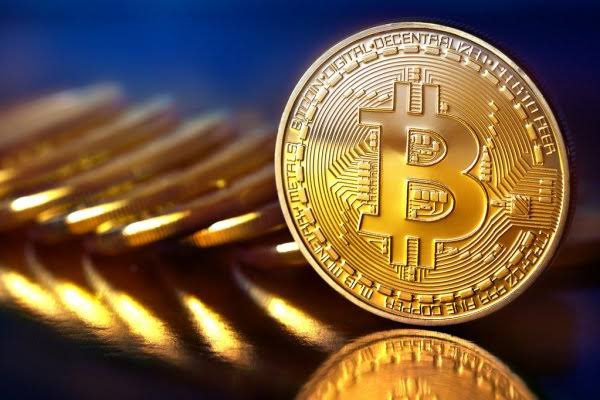
Blockchain allows cryptocurrencies like Bitcoin to function and enhances security. In addition, Blockchain can be used for, Smart contracts, Financial services, Video games, Energy trading and the Supply chain.
Blockchain was started by a mystery person (or people) named Satoshi Nakamoto as an open source technology. Bitcoin was the first and is the most popular cryptocurrency followed by Ethereum.
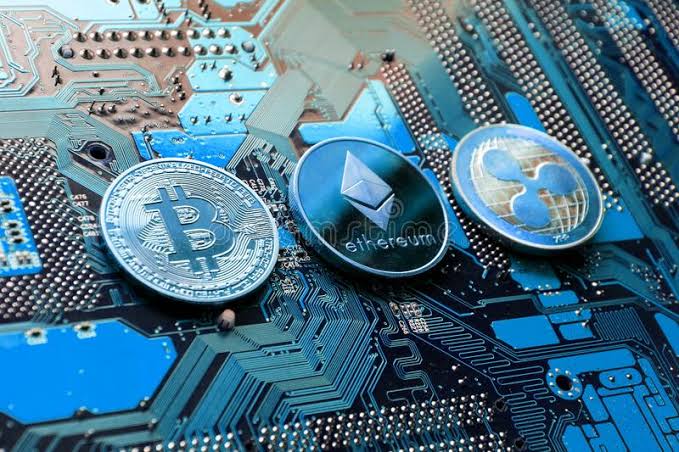
The major benefit is around decentralisation, so for example, organisations or governments cannot control your Bitcoin. This is quite appealing to many people who are concerned about the way in which their money is used and controlled. Financial crashes such as the 2008 recession was possible because peoples money and investment was being controlled banks. Cyptocurrencies like Bitcoin do not use banks or bankers. The stock exchange and finances are increasingly controlled by risky investments and algorithms, so digital currencies therefore offer a way of people taking control back. There are also opportunities to make money from these new currencies for people that know what they are doing. Finally, there could be some potential for currencies like Bitcoin and blockchain to make a difference to wealth distribution.
With its pros and cons, blockchain registers, certifies and imbues transparency, three basic aspects of a healthy financial system. In combination with a mobile phone, that represents the opportunity to bancarize two billion people. – BBVA
In 2021, Blockchain gained much more prominence and an all-time high for value, with companies such as Tesla investing $1.5 billion in Bitcoin.
Disadvantages of Bitcoin
There are several drawbacks to Bitcoin and other crypto-currencies. This is a new technology and therefore there are some usability problems. It can require technical expertise to fully grasp using and working with cryptocurrencies.
Furthermore, organisations such as the Bank of England have questioned it’s value in the long term. and cautioned against using it. There are still scaling problems, wild currency fluctuations and technical issues including thefts. Adding layers of usability such as Lightning Network could help to solve some of those issues in the future. Lightning offers an additional layer to offer potentially faster transactions and is an additional layer to the blockchain which can help scalability issues. In addition, the mining of coins (the process of adding transaction records to Bitcoin’s public ledger of past transactions or blockchain) is a technical task which requires a lot of power to do it. In fact, it costs more to mine Bitcoin than Gold or Platinum. So again, the addition of new technologies to help mining and reduce power will be required in the future.
Business adoption of Bitcoin
Many different businesses accept payment in Bitcoin and other cryptocurrencies. Organisations such as Microsoft, Namecheap, Overstock and KFC Canada accept it. Companies such as Purse.io enable Bitcoin to be used to purchase items from Amazon in some circumstances.
At MediaCityUK, the largest bar Social 7 became the largest cashless venue in the UK. It accepts card payments and cryptocurrencies such as Bitcoin.
ᴛʜᴇ ғᴜᴛᴜʀᴇ ᴏғ ʙɪᴛᴄᴏɪɴ
These new layers will continue to improve the usability and stability of the crypto currencies. Once it is easy and stable, they should reach more of a tipping point. There is no doubt that digital currencies will replace the cash and cards we have today. Don’t forget though that a lot of the world does not have a fast or stable Internet connection. Even in America, there are millions of people (45%) who prefer cash.
We will perhaps start to see more regulation and larger organisations and governments seeking control and regulation which could increase stability and reduce theft but would lose the decentralisation which is a key aspect currently. It may also present opportunities for less wealthy nations. If you take Paraguay for example, they have an abundance of hydro electric power which could be utilised for the mining of coins in the future opening whole new opportunities.
Finally, I think we’re seeing new coins such as football clubs and players creating their own coins. It’s possible that Bitcoin could replace cash for player transfers in the future. Digital companies are working on innovative ways to rejuvenate the declining high street experience and crypto-currencies could also play a part in this. Local coins for specific towns and cities also offer some interesting possibilities to link with other technologies and smart city digital innovations.
We are seeing some disruptive new innovations such as Non Fungible Tokens (NFTs) and Colored Coins gaining more prominence and some incredible stories surfacing in 2021 and this will continue to evolve. These blockchain based technologies open up further links between the digital and physical worlds and new business models and opportunities.
I would love to hear what you think of this article, if you have any comments or questions, please feel free to contact me or share this article.
ᴡʜʏ ʏᴏᴜ sʜᴏᴜʟᴅ ɪɴᴠᴇsᴛ ɪɴ ᴄʀʏᴘᴛᴏ
Another common reason to invest in cryptocurrency is the desire for a reliable, long-term store of value. Unlike fiat money, most cryptocurrencies have a limited supply, capped by mathematical algorithms. This makes it impossible for any political body or government agency to dilute their value through inflation.
Investing in crypto assets is risky but also potentially extremely profitable. Cryptocurrency is a good investment if you want to gain direct exposure to the demand for digital currency, while a safer but potentially less lucrative alternative is to buy the stocks of companies with exposure to cryptocurrency.
Most online transactions require an array of information to identify the person conducting the transaction. For example, transferring money from one person to another can only be done after the identifying information for parties at both ends is verified. Similarly, online purchases also require you to enter identifying information to make a purchase. The verification process may prevent crime, but it also places an intermediary firmly in-charge of the transaction, allowing them to control the provisioning of services to select parties. Bitcoin transactions are pseudonymous. While this means that they are not completely anonymous, the transactions can only be identified using a blockchain address. An individual can have multiple addresses, just as he or she can have multiple usernames and passwords for a single account. IP addresses or other identifying information are not required to conduct the transaction.
Bitcoin transactions are conducted on a peer-to-peer basis
The Bitcoin payment system is purely peer-to-peer, meaning that users are able to send and receive payments to or from anyone on the network around the world. Unless they are sending or receiving bitcoin from a regulated exchange or institution, the parties to a transaction do not require approval from an external source or authority.
Bitcoin transactions do not incur banking fees
While it is considered standard among cryptocurrency exchanges to charge so-called “maker” and “taker” fees, as well as occasional deposit and withdrawal fees, Bitcoin users are not subject to the litany of traditional banking fees associated with fiat currencies. This means no account maintenance or minimum balance fees, no overdraft charges and no returned deposit fees, among many others.
Bitcoin payments have low transaction fees for international payments
Standard wire transfers and foreign purchases typically involve fees and exchange costs. Since Bitcoin transactions have no intermediary institutions or government involvement, the costs of transacting are generally lower as compared to those for bank transfers. This can be a major advantage for travelers. Additionally, transfer in bitcoins is fast, eliminating the inconvenience of typical authorization requirements and wait periods
Bitcoin payments are mobile
As with many online payment systems, Bitcoin users can pay for their coins anywhere they have internet access. This means that purchasers do not have to travel to a bank or a store to buy a product. However, unlike online payments made with U.S. bank accounts or credit cards, personal information is not necessary to complete any transaction.
Bitcoin transactions are irreversible
One of the characteristics of Bitcoin’s blockchain is that it is immutable. Therefore, transactions using the blockchain are irreversible and cannot be amended by a third-party, such as a government entity or a financial services agency. It is also not possible to file a chargeback for bitcoin sent to someone else. The only way to reverse, in a manner of speaking, Bitcoin transactions is by having the recipient send back the original bitcoin.
Bitcoin transactions are secure
Bitcoin is not physical currency. Therefore, it is impossible for thieves to palm it off the holder’s person. Hackers can steal a person’s cryptocurrency if they know the private keys for the wallet. However, with proper security, it is technically impossible to steal bitcoin. While there are reports of hacks at cryptocurrency exchanges, Bitcoin’s exchange has remained impervious to such breaches. Therefore, transactions conducted between two (or multiple) addresses are secure.
Accessibility
Because users are able to send and receive bitcoins with only a smartphone or computer, Bitcoin is theoretically available to populations of users without access to traditional banking systems, credit cards, and other methods of payment.
ᴄᴏɴᴛᴀᴄᴛ ᴜs ᴏɴ
Sᴛᴇᴘʜᴇɴɪᴇᴊ221@ɢᴍᴀɪʟ.ᴄᴏᴍ
 bitcoin/forsage investment
